O.O. Shalimov National Scientific Center of Surgery and Transplantology, National Academy of Medical Sciences of Ukraine Shalimov National Center of Surgery, NAMS of Ukraine Official website of the Center

Department of Endovascular Surgery, Interventional Cardiology and Reperfusion Therapy

Endovascular surgery: treating artery disease without an open operation

Restoring blood flow and preserving the limb in limb-threatening ischemia and diabetic foot, endovascular aortic repair, carotid stenting. Procedures are performed through an arterial puncture under fluoroscopic and intravascular ultrasound (IVUS) guidance.

Interactive diagram of the leg arteries Choose the affected zone to get an explanation and a link to the detailed page.

Choose a zone on the diagram or in the list to see what happens there and how it is treated.

Endovascular surgery at the Shalimov Center

The O.O. Shalimov Center is Ukraine's national center of surgery and transplantology. The department performs endovascular procedures on the arteries of the lower limbs, the aorta, the carotid and visceral arteries through a vascular puncture, without open surgery; when a hybrid or open operation is required, the vascular surgery department is involved. The priority is limb salvage in chronic limb-threatening ischemia (CLTI) and diabetic foot syndrome, including recanalization of the arteries below the knee and in the foot.

Official page of the department on the Center's website

Conditions we treat

Arterial diseases in which endovascular revascularization makes it possible to avoid amputation or open surgery.

Chronic limb-threatening ischemia (CLTI)

Ischemic rest pain, ischemic ulcers, gangrene — the stage at which timely revascularization determines whether the limb is preserved.

Limb-threatening ischemia

Diabetic foot

Ischemic and neuro-ischemic forms: without restored arterial blood flow the ulcer cannot heal.

Diabetic foot

Peripheral artery disease

Intermittent claudication (calf muscle pain when walking) — a manifestation of arterial stenosis or occlusion that can be treated.

Peripheral artery disease

Consequences of blast and gunshot vascular injuries

Pseudoaneurysms, arteriovenous fistulas, post-traumatic occlusions — endovascular repair without repeat open access.

Vascular trauma

Aortic aneurysms

Endovascular repair of the abdominal and thoracic aorta (EVAR, TEVAR) through a femoral puncture instead of open surgery.

Aortic aneurysm

Carotid artery stenosis

Stenting of the internal carotid artery with cerebral protection — prevention of ischemic stroke without an incision in the neck.

Carotid artery stenosis

If you are not sure whether this applies to your case, get in touch and we will advise which examination to start with.

Take the self-check: is it the arteries? Get in touch

How treatment is performed

An endovascular procedure is performed from inside the vessel: through a puncture of an artery (usually femoral or brachial), instruments are guided under fluoroscopy to the diseased segment, and the lumen is restored by balloon angioplasty or stenting. No incision, under local anesthesia.

1Arterial puncture
2Guidewire across the stenosis or occlusion
3Balloon angioplasty
4Stenting: lumen preserved, blood flow restored

Technology at the department

Intravascular ultrasound (IVUS)

Measurement of the true vessel diameter, assessment of plaque structure and result control from inside the artery.

Angioplasty and stenting

Drug-coated balloons, stents, stent-grafts.

Below-the-knee and below-the-ankle recanalization

Procedures on 1–3 mm arteries, on which preservation of the foot depends in limb-threatening ischemia.

CO₂ angiography

Carbon-dioxide contrast without iodinated agents — for patients with chronic kidney disease or contrast allergy.

Result of the procedure

Angiography before and after the procedure: on the left, the occluded artery; on the right, restored in-line flow.

Before
After

Occlusion of the superficial femoral artery. Before the procedure the lower leg was supplied only through collaterals. After recanalization the artery is patent along its whole length and in-line flow is restored. Materials are published de-identified, with the patient’s written consent. The result of every procedure is individual and depends on the state of the arterial bed.

Doctors

Booking, questions and online consultations go through the program’s contact doctor.

Ivan A. Mazanovych

Ivan A. Mazanovych, MD

Head of the Department of Endovascular Surgery and Interventional Radiology

Leads the clinical department where the program's endovascular procedures are performed. Graduate of the Bogomolets National Medical University.

Profile on the Center's website
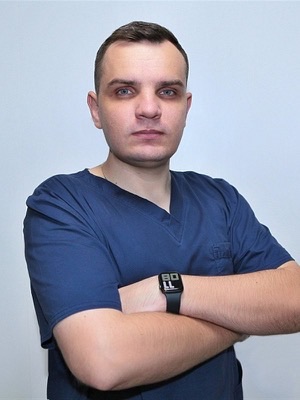
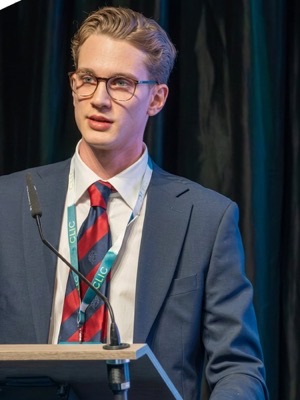
Yurii Vahis

Yurii Vahis

Vascular surgeon. Contact doctor for the program: booking, questions, online consultations

  • Endovascular procedures on the arteries of the lower limbs under IVUS guidance; doctoral research on IVUS-guided interventions in peripheral artery disease and blast-related vascular injuries
  • Fellowship: Policlinico Abano Terme, Italy (Marco Manzi, Mariano Palena)
  • Presentations in 2026: CLI-C GLOBAL (Venice), EuroPCR (Paris), UVS Congress (Lviv)
  • Organizer of Shalimov Live, surgical broadcasts from the Center's operating room

For referring physicians

Referral of patients with limb-threatening ischemia, diabetic foot syndrome, aortic aneurysms and the consequences of vascular trauma; discussion of complex cases; Shalimov Live surgical broadcasts and participation in the department’s research. Contact via the program’s contact doctor.

Get in touch

How to get treated

Treatment takes place at the O.O. Shalimov Center, a state institution. The sequence of steps:

  1. Get in touch

    Call the department at +380 44 454 20 79 or message the contact doctor on Telegram or through the form on this site. For patients from other cities and from abroad — a preliminary online consultation.

  2. Consultation and work-up

    Examination by a vascular surgeon, duplex ultrasound of the arteries and, when indicated, CT angiography. All examinations are performed at the Center.

  3. Admission

    Planned admission to the department; the list of documents and treatment conditions are agreed at the consultation.

  4. Procedure and discharge

    The endovascular procedure, observation, discharge usually on day 1–2, and a follow-up plan.

Frequently asked questions

What is endovascular surgery?

Treating blood vessels from the inside: through a needle puncture of an artery, usually in the groin, thin instruments are guided under X-ray to the diseased segment, where the narrowing is widened with a balloon and a stent or stent-graft is placed. There is no surgical incision of the kind made in open surgery.

What anesthesia is used and how long is the hospital stay?

Leg artery procedures are usually done under local anesthesia, with discharge usually on day 1–2. Aortic stent-grafting is done under spinal or general anesthesia, with a 2–4-day stay.

How do I book a consultation?

Call the department on +380 44 454 20 79, or message the doctor on Telegram @Y_Vagis or by email at vagisura@gmail.com.

Book a consultation

Booking — by the department's phone or through the program's contact doctor. Consultations and treatment take place at the Shalimov Center.

Address

Shalimov National Scientific Center of Surgery and Transplantology, 30 Akademika Shalimova St, Kyiv, 03126, Ukraine

Directions

Consultations

By appointment. Online consultations for patients from other cities and countries by arrangement.

Write to the doctor

Sudden pain, coldness, pallor or numbness of a leg, or signs of a stroke: do not use this form — call an ambulance (103 in Ukraine). The form is for non-urgent questions.

Describe the problem and, if available, attach a duplex ultrasound report, CT angiography or discharge summary. The program’s contact doctor replies.

Consultations and treatment take place at the Shalimov Center.

Thank you, your message has been sent. The doctor will reply to the phone or Telegram you provided.
?Is it the arteries?5-question self-check